
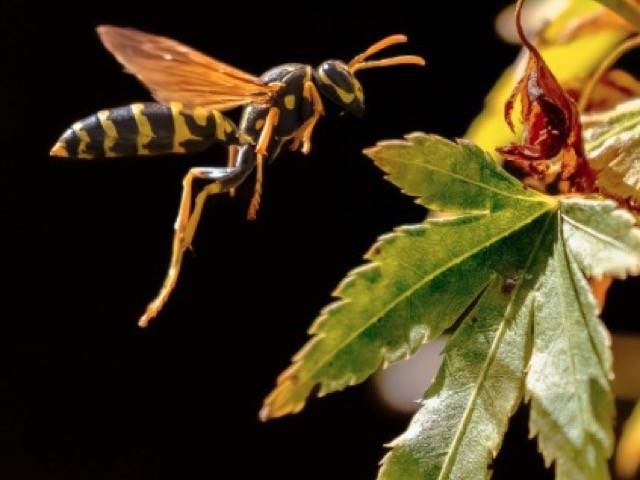
A wasp or two cruising the backyard is part of a North Idaho summer. A nest in the eaves or a yellow-jacket colony under the deck is another thing entirely — suddenly your own patio feels off-limits. The good news: a few simple habits make your deck a lot less attractive, and timing your defense right keeps nests from ever getting big.
Why your deck attracts wasps
Wasps want two things in summer: food and a sheltered place to build. Decks and patios offer both — sugary drinks, food, and open trash for the foragers, plus protected eaves, soffits, railings, and the dark space under the decking for nests. Yellow jackets in particular love to nest in the ground and in voids right around patios and play areas.
Early summer is the window that matters
In spring, a queen starts a nest that's small and easy to deal with. By late summer that same nest can hold hundreds of wasps and turns far more defensive. The single most effective thing you can do is handle nests early — late spring into early summer — before they grow into a hazard. If you spot a starter nest, see our wasp & hornet nest removal page.
What you can do to reduce them
- Keep food and sweet drinks covered, and don't leave them sitting out on the deck.
- Use sealed trash cans and rinse out recycling — sugar residue is a magnet.
- Walk your eaves, soffits, railings, and play structures every couple of weeks in spring and knock down tiny starter nests.
- Seal gaps in soffits and siding where wasps slip in to build hidden nests.
- Move hummingbird feeders and ripening fruit away from seating areas.
- Watch the lawn for yellow jackets flying in and out of one spot in the ground.
Yellow jackets, paper wasps, or hornets?
Paper wasps build the familiar open, umbrella-shaped combs under eaves. Bald-faced hornets build big football-shaped paper nests in trees and on walls. Yellow jackets often nest underground or in wall voids and are the most aggressive around food. They're treated differently, which is why ID matters — our wasp page breaks down where each one nests.
When to leave it to a pro
A small, exposed paper-wasp nest is one thing, but a large nest, a hidden one inside a wall or soffit, or an underground yellow-jacket colony is a real sting risk — especially for kids, pets, and anyone allergic. If the nest is bigger than a golf ball or you can't see all of it, don't swat at it. Call or text (208) 405-0004 and we'll remove it safely.
Frequently asked questions
What attracts wasps to my deck and patio?
Food, sugary drinks, and open trash draw foraging wasps, while eaves, soffits, railings, and the space under decking give them sheltered places to nest. Keeping food covered and checking for starter nests in spring makes a big difference.
When should I treat for wasps in North Idaho?
Late spring into early summer is ideal, while nests are still small and easy to handle. Waiting until late summer means dealing with a much larger, more defensive nest.
Are yellow jackets and wasps the same thing?
Yellow jackets are a type of wasp, but they behave differently — they often nest in the ground or in wall voids and are especially aggressive around food. Paper wasps and bald-faced hornets build aerial paper nests. Each is treated a little differently, so identifying which you have matters.